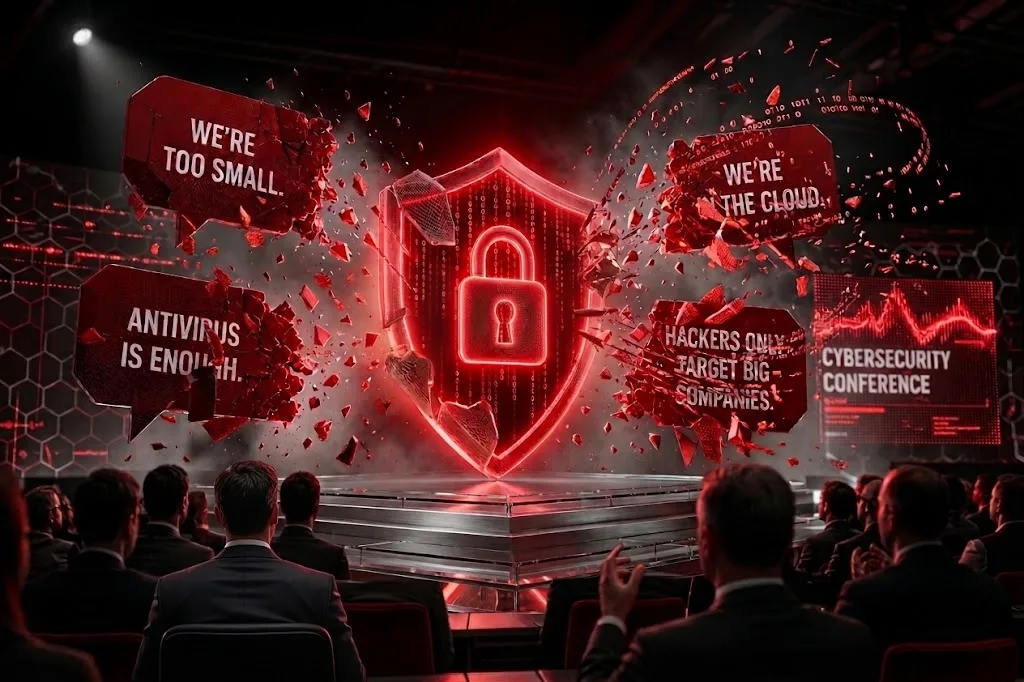
Last week I spent a day at the 6th annual Official Cybersecurity Summit at the Renaissance Center in Detroit, surrounded by security leaders, vendors, and business owners all wrestling with the same question: why do breaches keep happening to companies that thought they were covered? Between the keynotes, the panels, and the hallway conversations, one pattern kept surfacing. The problem is usually not a missing product. It is an outdated assumption.
What struck me most was hearing enterprise security leaders and owners of 20-person shops describe the same blind spots. The scale changes. The assumptions do not. Here are eight of them I heard challenged again and again, and why letting go of them can protect your organization.
“It won’t happen to us.”
This may be the most dangerous assumption a business can make. If I heard one line repeated in session after session, it was this: attackers do not choose targets, they scan for them. The assumption usually shows up in one of three forms.
“We’re too small to be a target.”
Cybercriminals do not always choose their victims personally. Many attacks are automated: scanning tools constantly search the internet for exposed systems, outdated software, and misconfigured servers. A small business with weak security can actually be a more attractive target than a larger company with a dedicated security program, because attackers look for the easiest opportunity, not the biggest name.
“Nobody knows our business.”
Most cyberattacks do not start with someone researching your company by name. Automated systems scan huge numbers of websites, IP addresses, and email accounts looking for weaknesses. In many cases, attackers are not looking for your organization. They are looking for any organization with a weakness they can exploit.
“We don’t have anything valuable.”
Data is not the only thing attackers want. Your systems could be used to:
- Send spam emails
- Spread malware
- Mine cryptocurrency
- Attack other organizations
- Gain access to your suppliers or customers
Even if your data has little value to an attacker, your network and systems may still be useful.
“If we have backups, we’re safe.”
Backups are one of the most important parts of cybersecurity, but they are not a complete recovery plan.
Backups can fail. They may be incomplete, corrupted, or improperly secured. Attackers also know that backups are valuable targets: after gaining access to an environment, they often try to encrypt or remove backup systems to make recovery more difficult.
Another challenge is that malware can remain hidden for months or even years before being discovered. If that malware is already present in your backups, restoring your systems may bring the same problem right back.
A backup that has never been tested is only a theory.
The important questions are:
- Are your backups separated from your production environment?
- Are they protected against unauthorized changes or deletion?
- Do you regularly test whether recovery actually works?
A backup only provides protection when you know you can depend on it during an emergency.
// Myth 03“Cybersecurity is IT’s responsibility.”
IT plays an important role in cybersecurity, but security cannot be managed by one department alone. Technology teams can configure systems, install security tools, and respond to technical issues. Every department, however, influences the security of the organization.
- HR manages employee onboarding and offboarding.
- Finance handles payments and is often targeted by fraud attempts.
- Marketing manages websites and social media accounts.
- Procurement works with outside vendors.
- Leadership decides which risks are acceptable.
An employee leaves the company after a dispute and threatens to take company information with them. Does the security team know? Are their accounts disabled quickly enough? Many security incidents happen because information does not reach the right people at the right time.
Cybersecurity works best when everyone in the organization understands their role.
// Myth 04“We’re already doing enough.”
Many organizations evaluate their cybersecurity based on the amount of effort they put in rather than the protection they actually achieve. “We have a firewall.” “We use antivirus.” “We have security policies.”
Several attendees I compared notes with described the same situation: a shelf of security products, a binder of policies, and no clear answer to whether any of it reduced their actual risk.
Those things matter, but having security tools and documents does not automatically mean an organization is secure. Too many alerts can make it harder to notice the issues that truly require attention. A detailed security policy does little if employees do not understand it or follow it. And security measures that are never reviewed can keep creating a false sense of confidence for years.
Cybersecurity is not measured by the number of controls you have in place. It is measured by whether those controls reduce the risks that matter.
Instead of asking “Are we doing enough?” ask “Are we protecting the risks that are most important to our organization?”
“Security problems happen because of vulnerabilities.”
Many organizations focus heavily on software vulnerabilities while overlooking another major source of risk: assumptions. A large number of security incidents happen because of incorrect configurations, poor settings, or processes built around assumptions that were never verified. For example:
- A cloud storage location that was accidentally made public.
- An administrator account without multi-factor authentication.
- Employees who have more access than they need.
- Old accounts that were never removed.
- Systems that everyone assumes someone else is responsible for managing.
In many cases, the biggest problem is not the vulnerability itself. It is the assumption that everything is already configured correctly.
Strong cybersecurity requires more than finding technical weaknesses. Organizations also need to regularly question their processes and verify that systems are working as intended.
// Myth 06“Spending more on cybersecurity automatically makes us safer.”
Adding more security tools does not automatically reduce risk. Every new solution adds another system to configure, manage, and maintain. It also creates another opportunity for mistakes, outdated settings, or misconfigurations.
Many organizations measure cybersecurity success by looking at things like:
- The number of security products they have purchased.
- The number of assessments they have completed.
- The number of hours spent on security activities.
Those measurements can show effort, but they do not necessarily show resilience. A simple security environment that is properly managed is often more effective than a complicated collection of tools that overlap, create noise, or are not fully understood by the people responsible for them.
The goal is not to have the most security technology. The goal is to have security that actually works.
// Myth 07“I would know if someone was trying to scam me.”
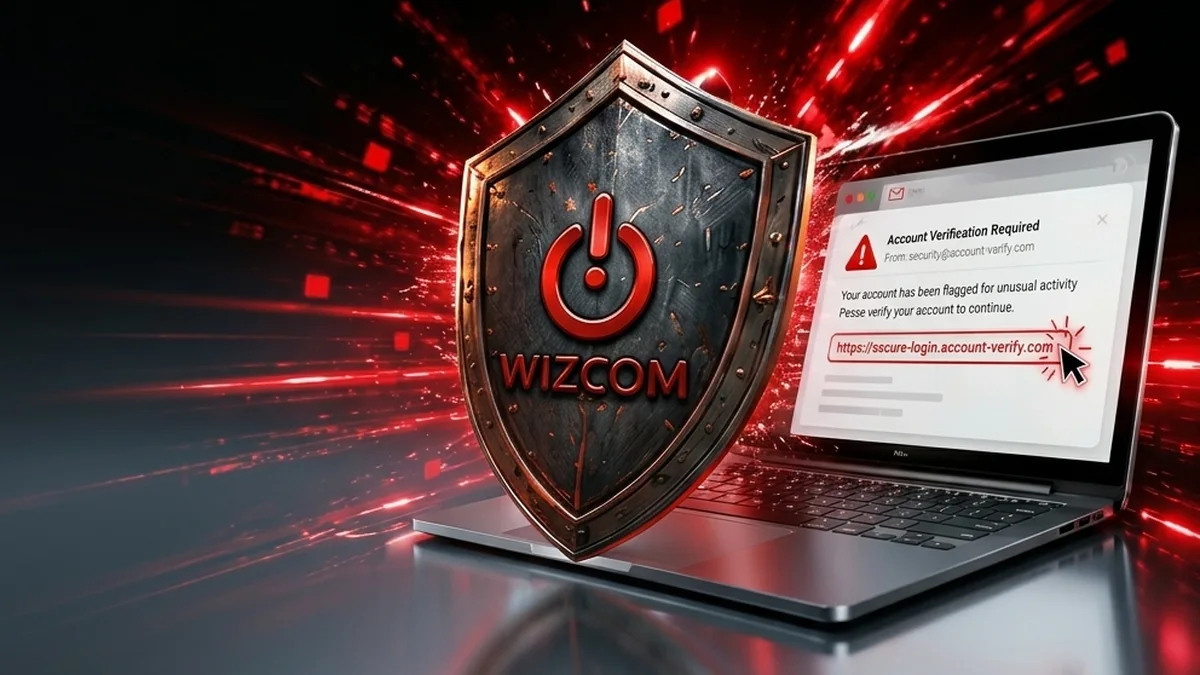
That assumption is becoming harder to rely on. One session at the summit focused entirely on next-level social engineering built with AI, and it was sobering. Cybercriminals are getting better at creating convincing phishing emails, realistic fake websites, and even AI-generated voices and videos. A phone call from a company executive can sound completely genuine while being created by artificial intelligence. An email from a trusted supplier can appear legitimate, using the correct branding, writing style, and previous conversation history.
As attacks become more convincing, simply trusting what looks familiar is no longer enough. Good security requires verification:
- Confirm payment requests before sending money.
- Verify unexpected instructions through another communication method.
- Avoid making important decisions based only on an email or phone call.
Something that looks real may still be fake.
// Myth 08“Cybersecurity is too expensive.”
Many organizations view cybersecurity as an expense. A better question is: compared to what?
The cost of a cyber incident is rarely limited to fixing damaged systems. A serious incident can also result in:
- Business interruptions
- Lost revenue
- Damage to your reputation
- Legal expenses and potential fines
- Recovery efforts
- Loss of customer trust
For many organizations, recovering from a major security incident costs far more than the investment that could have reduced the risk beforehand. Cybersecurity is an investment in keeping the business running.
Not every security improvement produces an immediate, visible return. But when an incident is prevented, or its impact is significantly reduced, that investment often proves its value.
What I took home
Cybersecurity is not about creating fear. It is about understanding reality. Many organizations do not experience security incidents because they ignore cybersecurity completely. They experience them because they rely on assumptions that may no longer be accurate.
I walked out of the Renaissance Center with pages of notes on tools and threats, but the biggest thing I took home was not a product name. It was a mindset. The threat landscape changes constantly, and organizations need to regularly review how they identify, evaluate, and manage risk. Letting go of these common myths strengthens not only your technology environment but your entire organization. Good cybersecurity does not start with buying the newest tools. It starts with making informed decisions.
Which of these assumptions is your business relying on?
Our free IT security checklist walks through the controls that actually matter, in plain English, so you can see where you stand in about ten minutes. No jargon, no sales pitch.
Get the Free IT Security Checklist